Landscape design
When to hire a landscape architect: before, during or after construction?
It is one of the questions we hear most, and it almost always comes late: the house is at the finishing stage, a strip of bare soil is left over and someone remembers the garden is missing. A good project is still possible at that point, and we design many. But the best garden is born much earlier, while the house is still a drawing. The end of the year is when next year's construction gets planned, so it is worth putting this decision in the right order.
The garden starts on the drawing board
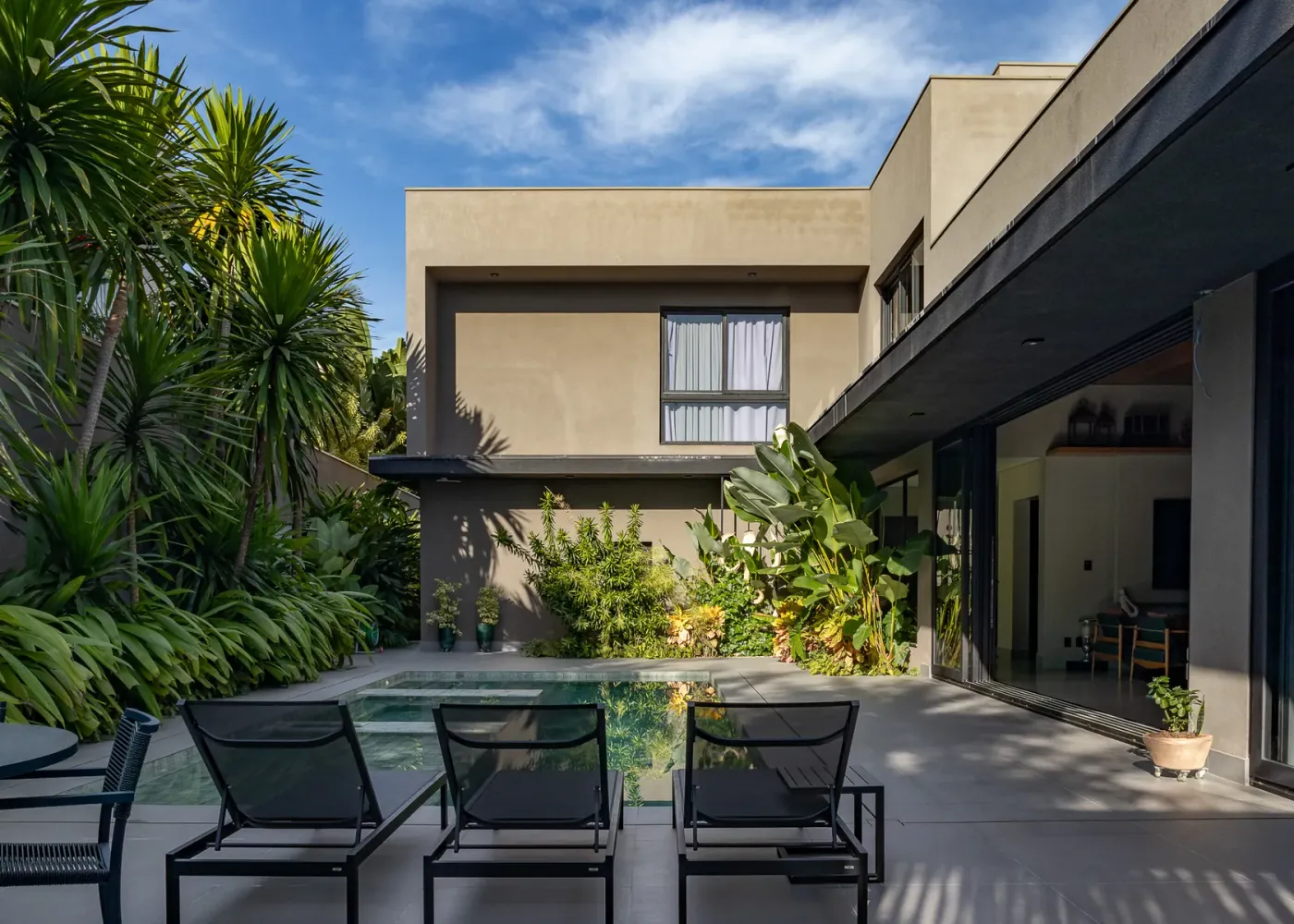
When landscape design comes in together with the architecture, it stops filling whatever was left of the plot and starts taking part in the choices that define the house: where the living room opens to, where the pool gets sun, which side the afternoon shade comes from, what you see from each window. This is what we call biophilic architecture, a way of designing in which nature is part of the concept of the house. We go deeper into it in our article on the benefits of biophilia.
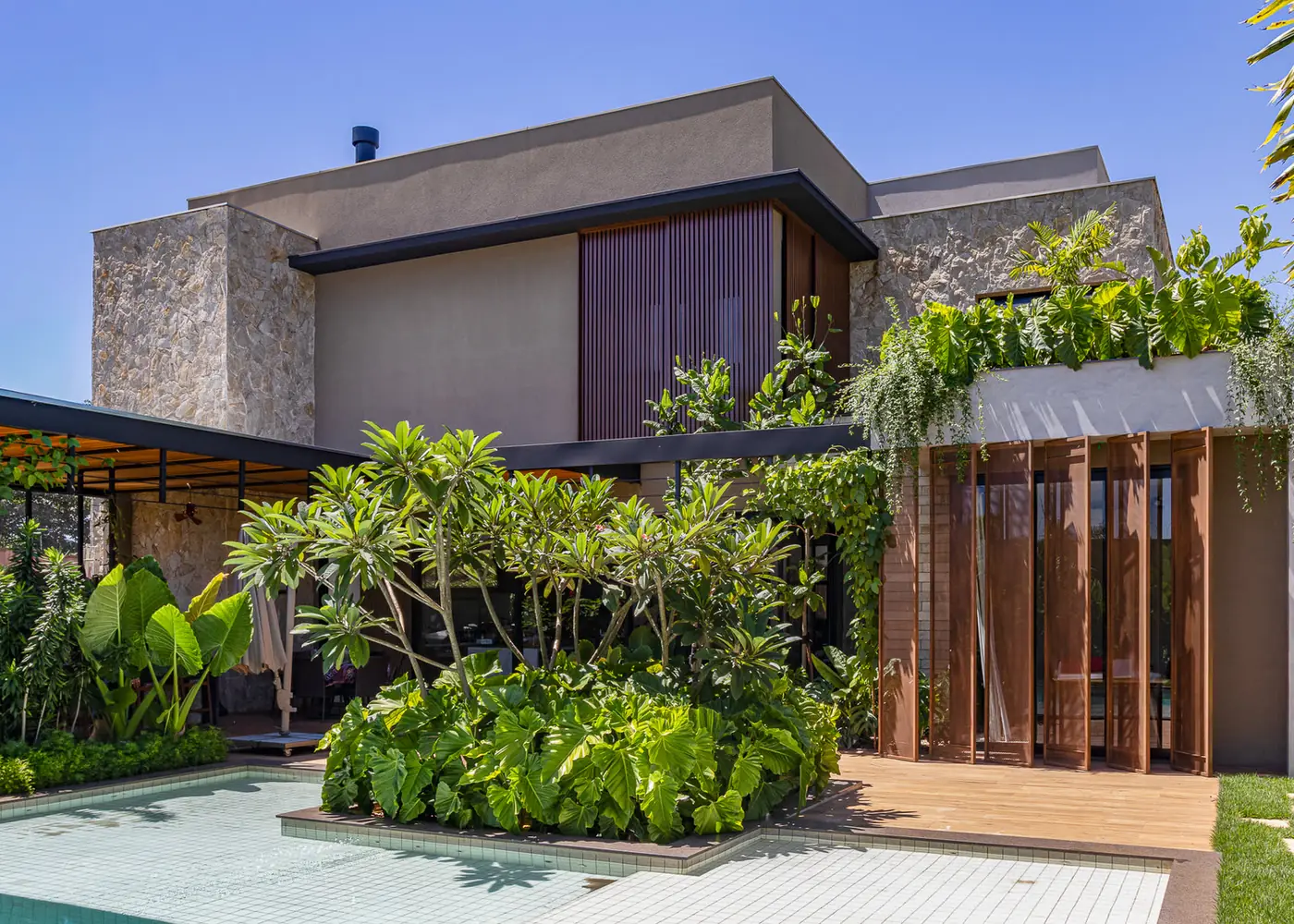
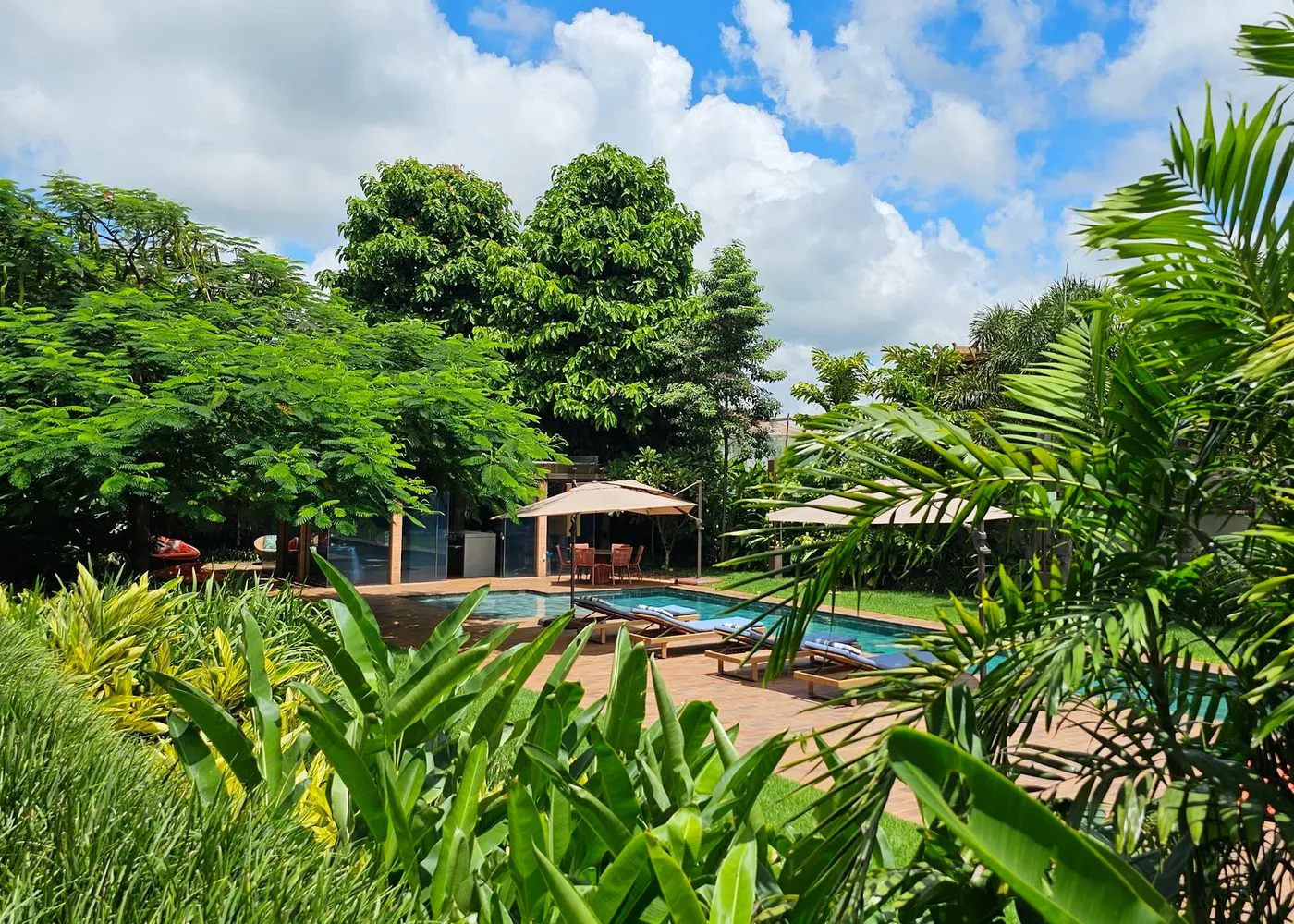
At Residencial RM, the landscape composition is in dialogue with the architecture, and water and masses of vegetation were conceived as layers of a single design. At Bordas do Parque, vegetation works as a filter between the plot and the city: there, the garden is part of the architecture, not a finish.
What can only be solved before construction
Some garden decisions are, in fact, construction decisions. Once the paving is laid and the walls are up, they cost more, end up half done or are no longer possible.
Trees. A tree needs room for its canopy and its roots, distance from foundations, walls, the pool and pipes, and a position planned in relation to the sun. Defining this in the project guarantees shade where it is needed and avoids conflict with the building years later. Trees that already exist on the plot are part of the equation too: many can be preserved if the siting of the house takes them into account from the start.
Levels and drainage. Earthworks define where rainwater runs. Planting beds without drainage get waterlogged, and roots in waterlogged soil rot. Solving slopes, drains and outlets during earthworks is simple; solving them later, with everything finished, means breaking things up.
Irrigation and lighting. Both depend on pipes and conduits that run under paving, decks and paths. Planned in the project, they go into the works with no rework. Remembered at the end, they mean cutting what has just been built.
Gardens over slabs. Planting beds on terraces, rooftops and over garages need soil depth, waterproofing and a structure calculated for that load. The engineer needs this information before sizing the slab.
Pool and living areas. The position of the pool, the deck and the veranda determines sun, privacy and the view for those who use the house. It is where architecture and landscape most need to be designed together.
During construction: landscape follows each stage
With the project ready before the start, each construction front receives the information it needs at the right time: earthworks know the levels, plumbing leaves the irrigation points, electrical leaves the lighting circuits, the structure accounts for the planting beds. Planting is the last stage, but everything that supports it was built earlier.
At this stage, our role is to follow the works. We manage the implementation of the project and recommend trusted contractors for each front, such as planting, irrigation, lighting and stonework, so the garden is born faithful to what was designed.
What if the house is already built?
It is still worth it, very much so. Many of the gardens we sign were designed for existing houses. What changes is the starting point: instead of deciding together with the works, the project starts from what is already built, reads the sun, the soil, the views and the levels, and makes the most of each condition. Some solutions require intervention in paving or installations, and in those cases we assess with the client what is worth redoing.
A well-designed garden transforms a finished house. What it cannot do is move the pool that ended up in the shade or the window that opens onto a wall. That is why the recommendation stays the same for anyone who is yet to build: bring landscape design into the conversation while those choices are still open.
Planting time can be planned too
Deciding early also lets you choose when to plant. In inland São Paulo, the start of the rainy season is the most favourable period for a garden to establish itself, as we explain in the article on the best time to plant in Ribeirão Preto. Those who plan construction with landscape in the schedule can make the end of the works coincide with that moment, instead of planting in the dry season because that was when the building was finished.
A single design, from floor plan to garden
A house and a garden conceived together result in a more complete place: shade is where the heat asks for it, water drains where it should, and green appears in every window because it was planned there. That continuity is what we recognise as the Andréa Esteves Signature, whether in Ribeirão Preto or in the high-end landscape design projects we develop, in person and remotely, all across Brazil.
Frequently asked questions
When is the best time to hire a landscape architect?
Together with the architectural project, before construction starts. That is when the position of trees, the pool and living areas is defined, along with site levels, drainage and the infrastructure for irrigation and lighting.
Can landscape design be done when the house is already built?
Yes, and it is a very common situation. The project starts from what is already built and makes the most of the existing sun, soil and views. Some solutions may require intervention in paving or installations, which is assessed case by case.
What needs to be planned in the construction for the garden?
Site levels and drainage, water points and irrigation pipes, conduits for lighting, soil depth and waterproofing for planting beds over slabs, and the space reserved for trees.
Does the landscape architect work with the architect and the engineer?
Yes. The landscape project provides information that architecture, structure, plumbing and electrical design need before execution. When architecture and landscape are developed by the same studio, that integration happens from the first drawing.
When is the garden planted?
Planting is the last stage of the works, after the heavier fronts are finished. The infrastructure that supports the garden, such as drainage, irrigation and lighting, is built earlier, along with the construction.
Do you follow the implementation of the garden?
Yes. We manage the implementation of the project and recommend trusted contractors for each front, such as planting, irrigation, lighting and stonework.
Building or renovating in 2027? Let's talk about your project while the choices are still open.
Chat on WhatsApp →